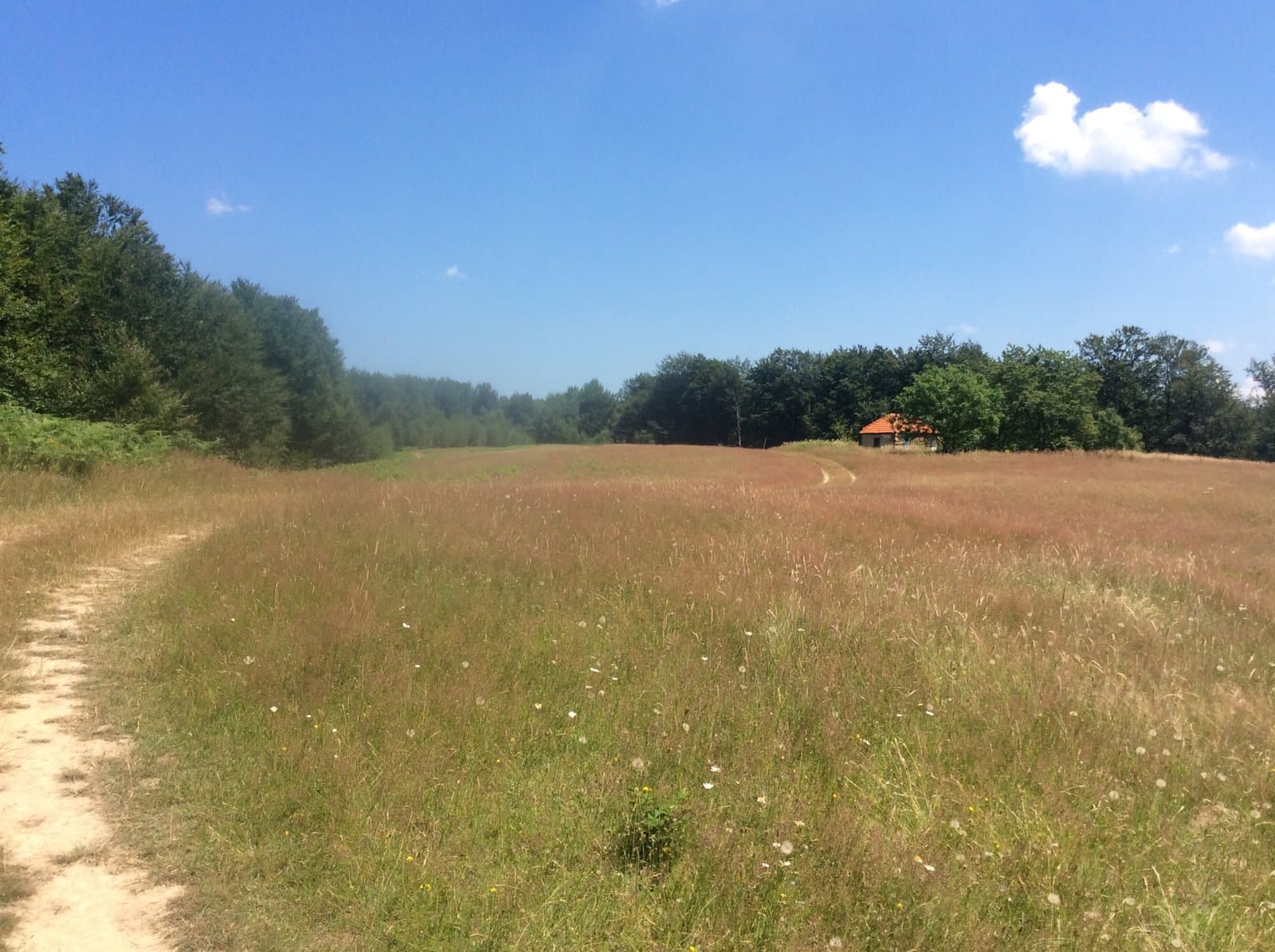
A landscape at the edge of Europe's wildlife corridor.
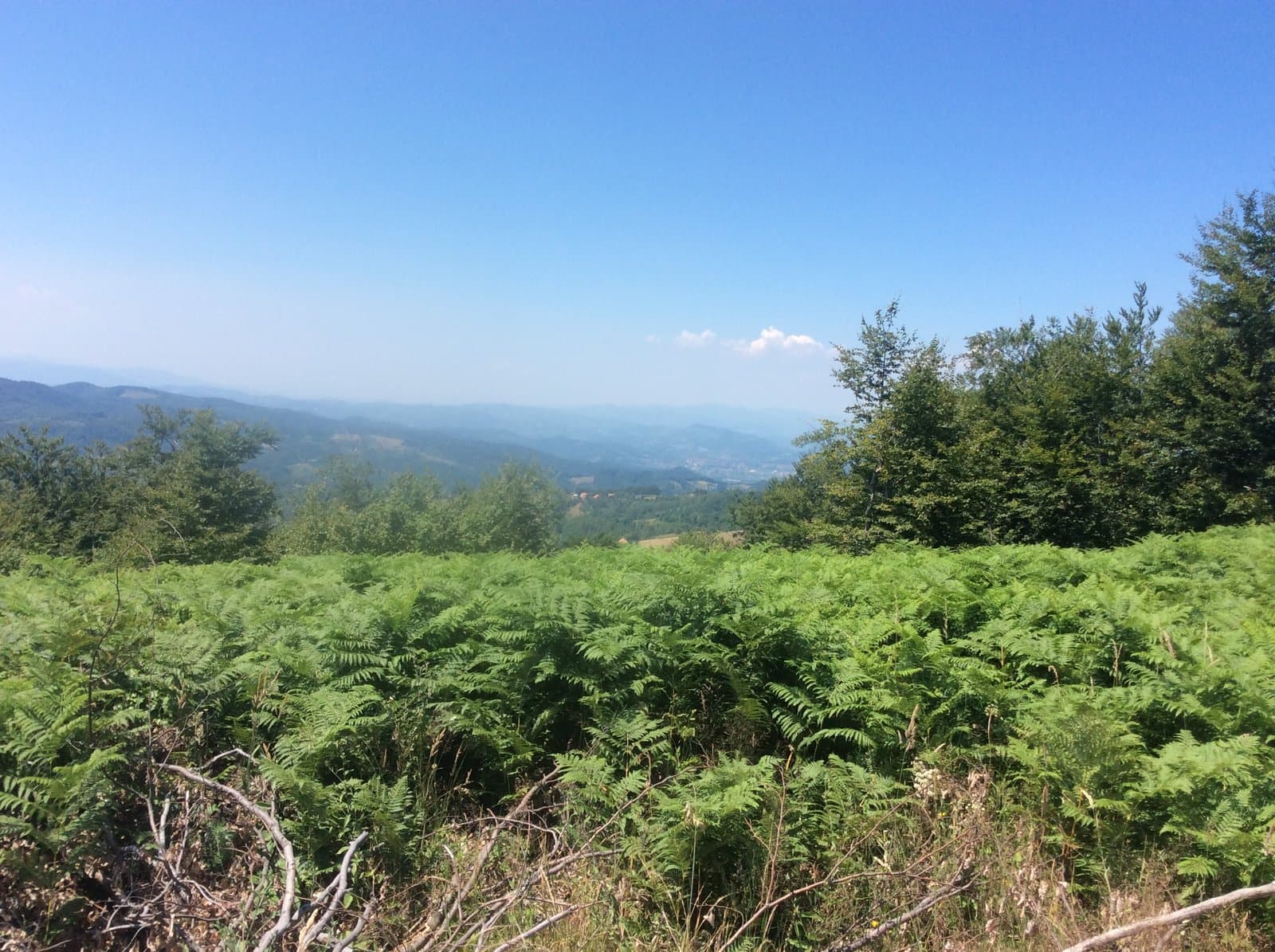
The Rađevina hill country of western Serbia sits within one of the most important remaining wildlife corridors in Europe — the Dinara–Rhodope arc of forested mountain range that runs from Slovenia through the Balkans to the Greek border. Large mammals that are extinct from most of western Europe — wolf, lynx, brown bear — are present in this wider landscape.
Krupanj Municipality retains over 50% forest cover and has not experienced the agricultural intensification that has driven wildlife loss elsewhere in Europe. The traditional farming practices of the Planina area — small fields, late hay cutting, no pesticides, mixed crops — are precisely what wildlife needs and rarely finds.
Habitats
Four distinct habitats. Each with its own community.
- Great spotted woodpecker
- Green woodpecker
- Tawny owl
- Sparrowhawk
- Dormouse (Glis glis)
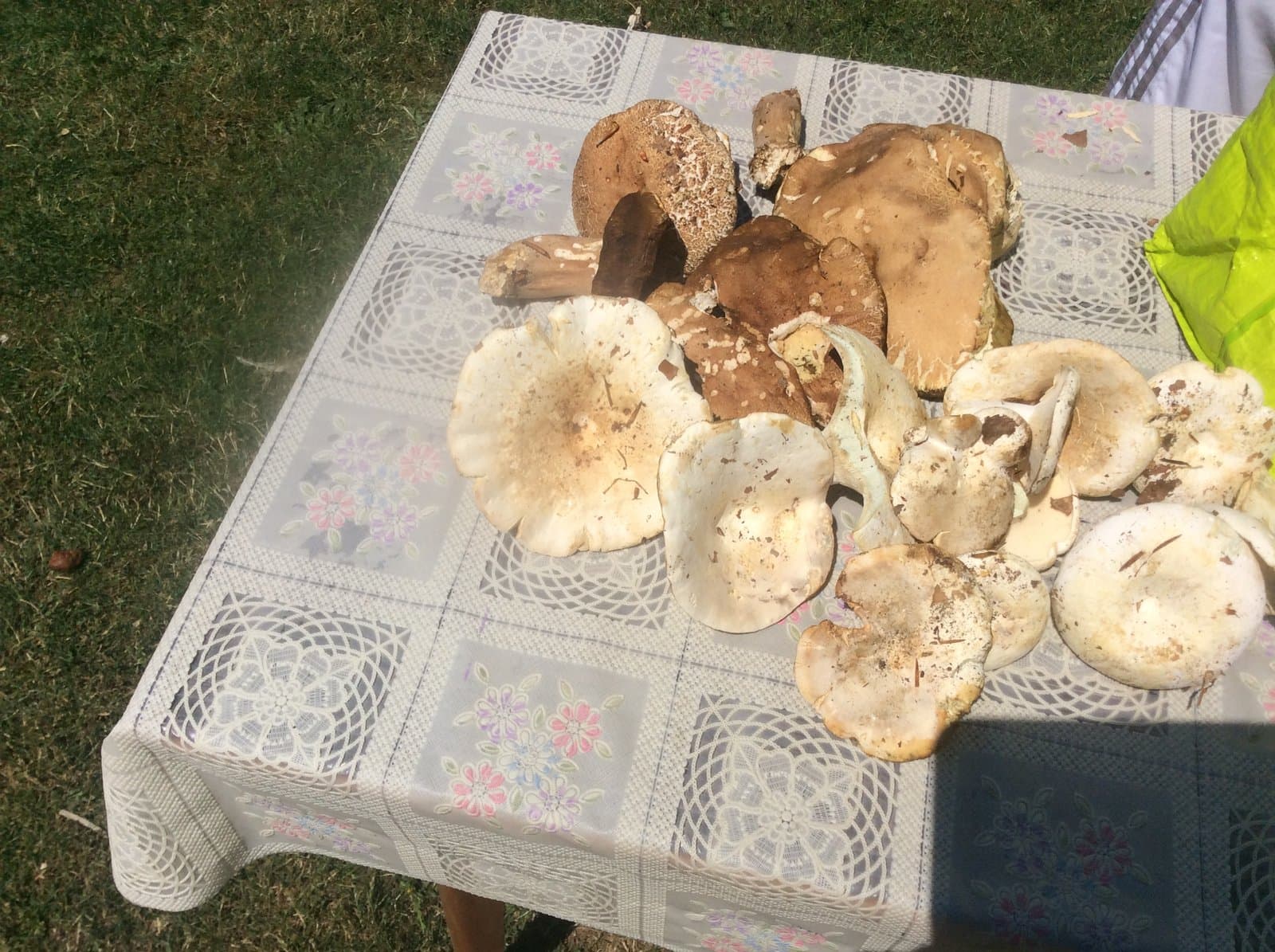
- Porcini, chanterelle, parasol mushroom
The dominant habitat of the Rađevina hills. Beech (bukva) predominates on north-facing slopes and higher elevations; oak (hrast) on south-facing and lower ground. Hornbeam, hazel, and wild cherry occupy the understory and margins. The forest floor in spring is carpeted with wood anemone, wild garlic, and primrose. In summer the canopy closes and the floor goes quiet. In autumn the fungi begin.
- Common lizard
- Slow worm
- Marsh fritillary butterfly
- Purple emperor (in adjacent forest edges)
- Bumblebees (6+ species)
- Common kestrel (hunting the margins)
The traditional hay meadows of the Planina area are among the most flower-rich grasslands remaining in western Serbia. Cut twice a year — in July and September — and never fertilised, they support a diversity of plants that has largely disappeared from agricultural landscapes elsewhere. Field scabious, knapweed, ox-eye daisy, betony, yellow rattle, and wild orchids in the wetter corners. The invertebrate communities they support are extraordinary.
- Little owl
- Swallow and house martin
- Spotted flycatcher
- White stork (passing, April–August)
- Multiple hoverfly species
- Solitary bees
Old orchards — especially those with traditional fruit varieties, hollow trees, and undisturbed ground — support a disproportionate diversity of wildlife. Decaying wood in old plum trees hosts specialist beetles. The orchard floor, kept in wildflower cover here, is among the best habitats on the farm for bees and hoverflies. Swallows nest in the barn. A little owl uses the old apple tree at the farm boundary.
- Nightingale (May–June)
- Roe deer
- Common pipistrelle bat
- Noctule bat
- Golden oriole (May–August)
- Red-backed shrike
The transition zone between forest and open land — where the trees thin out and light reaches the ground — is often the richest habitat of all. Nightingales sing here in May and June. Roe deer move through at dawn and dusk. Bats emerge from the forest edge after dark: common pipistrelle, soprano pipistrelle, noctule, and long-eared bats have all been recorded in similar landscapes nearby.
Wildlife calendar
What to look for, when.
First migrants arrive: swallows, swifts, warblers. Wild garlic and wood anemone carpet the forest floor. Bees begin to build.
Peak birdsong — nightingale, golden oriole, turtle dove, cuckoo. Orchid flowers in the meadow corners. Swallows nesting.
Grasshoppers and crickets dominate. Butterflies peak — purple emperor around the forest edge, marbled white and meadow brown in the hay meadow before the first cut.
First porcini if the summer rains have been good. Honey harvest. Plums beginning. Swifts departing south.
Mushroom season in earnest. Roe deer rutting — the bucks bark at dawn. Migrant warblers pass through. Meadow cut for the second time.
Fungi peak. Leaves turn. Fieldfare and redwing arrive from the north, feeding on the windfall fruit in the orchard. Bats active on warm evenings until mid-month.
The forest goes quiet. Great grey shrike sometimes overwinters on the exposed ridge. Woodpeckers active. Little owl calling from the orchard on clear nights.
“This is not a nature reserve. It is a farm. The wildlife is here because the farm is run the way it is.”
Guests interested in natural history are welcome to ask their host for the best spots, times, and what is in season during their stay.