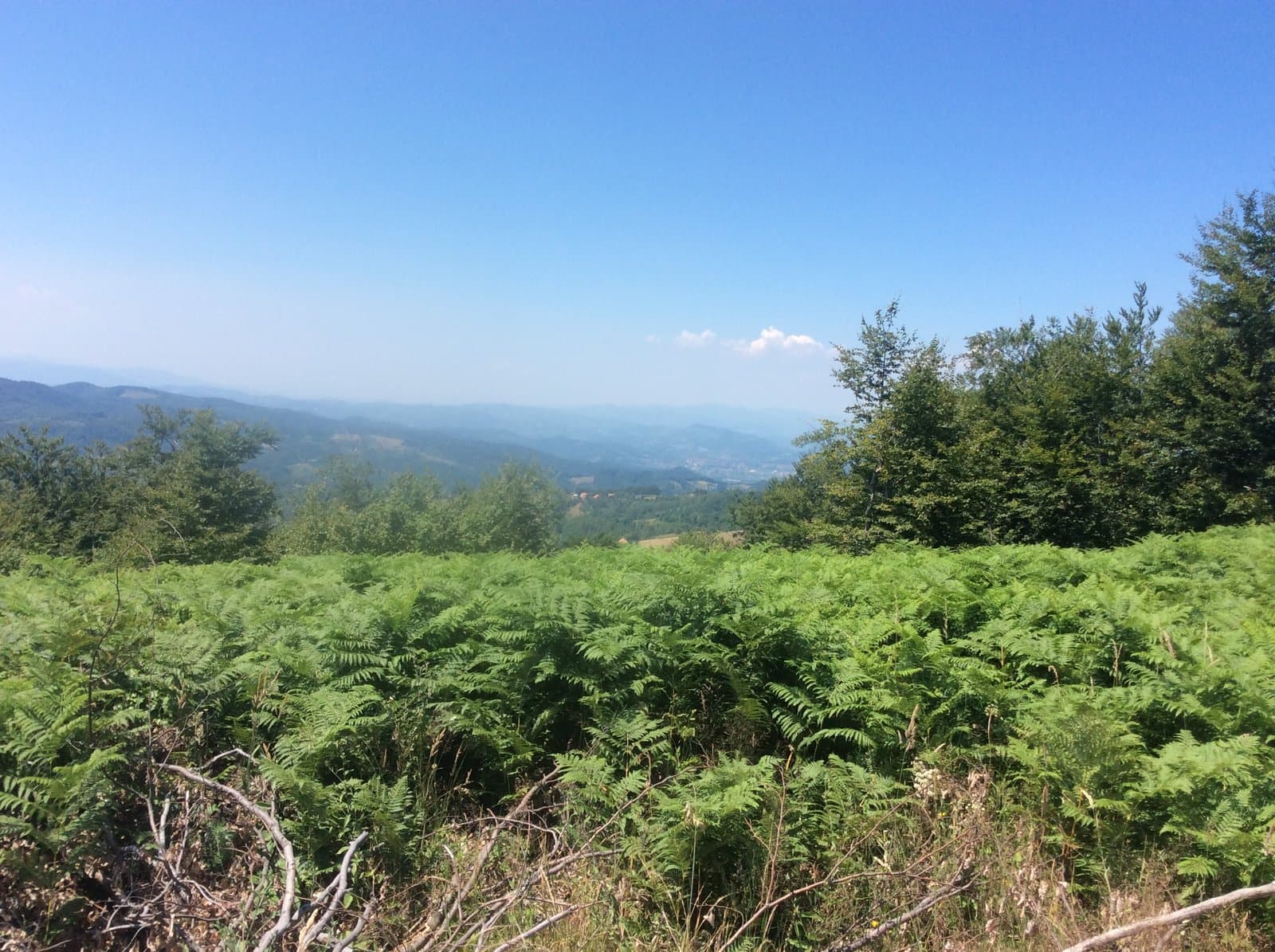
The same family. The same land.
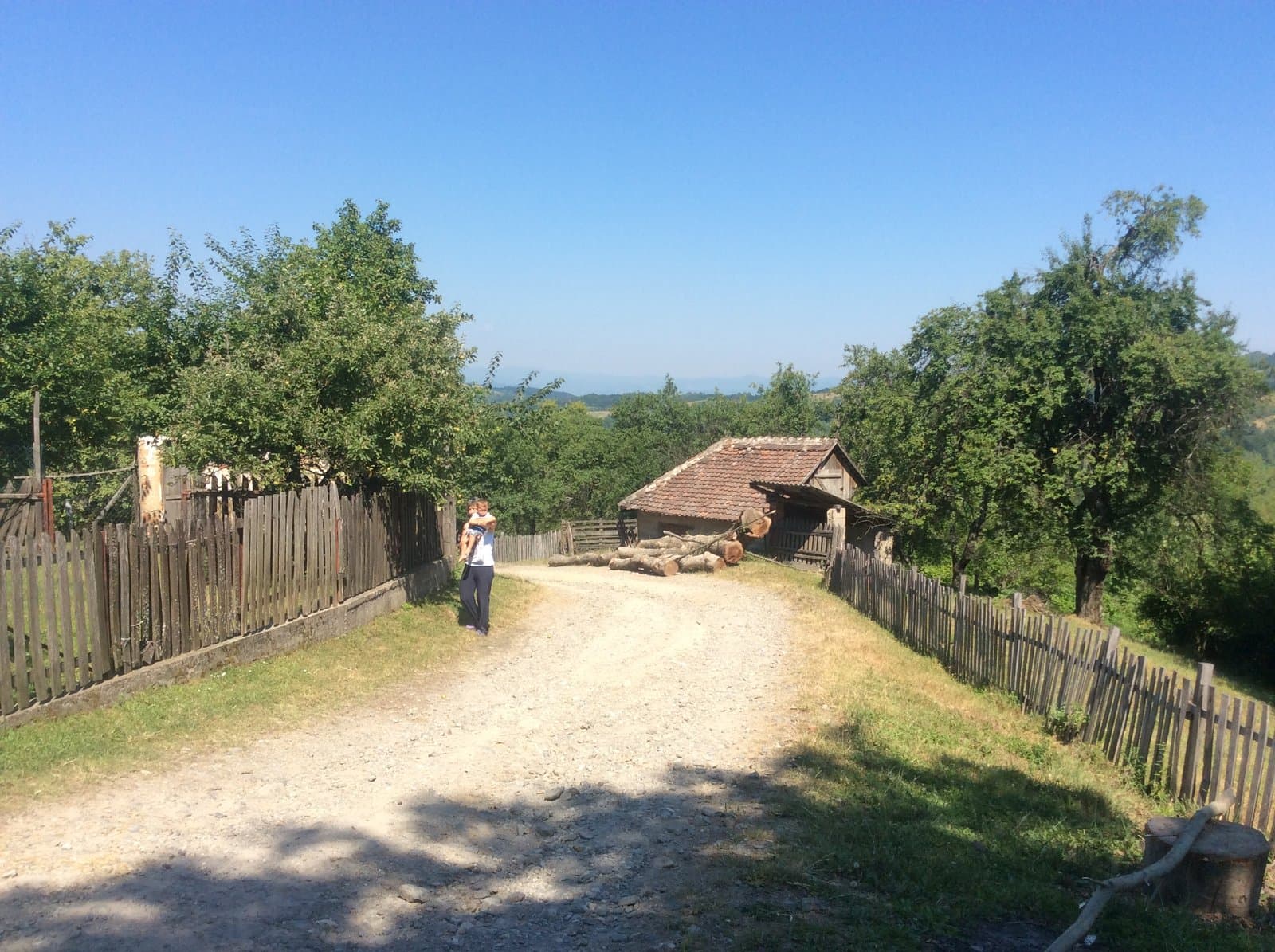
Planina village sits at around 600 metres in the Rađevina hill country of western Serbia. The farm has been worked by the same family for as long as the oldest members can remember — their parents farmed it, their grandparents farmed it. The terraces were cut by hand. The orchards were planted by someone long gone.
Ten acres sounds modest. In practice it is a complete working landscape: orchards and meadows in the valley, forest on the slopes above, beehives at the orchard edge, a kitchen garden by the house. Each part of the farm feeds the others — the meadow hay feeds the animals, the animals make manure, the manure feeds the orchard, the orchard feeds the bees, the bees pollinate the orchard.
There are no synthetic fertilisers. No pesticides. Not as a philosophy — simply as how farming here has always worked. The inputs are labour, attention, and time.
The Land
Five distinct zones.
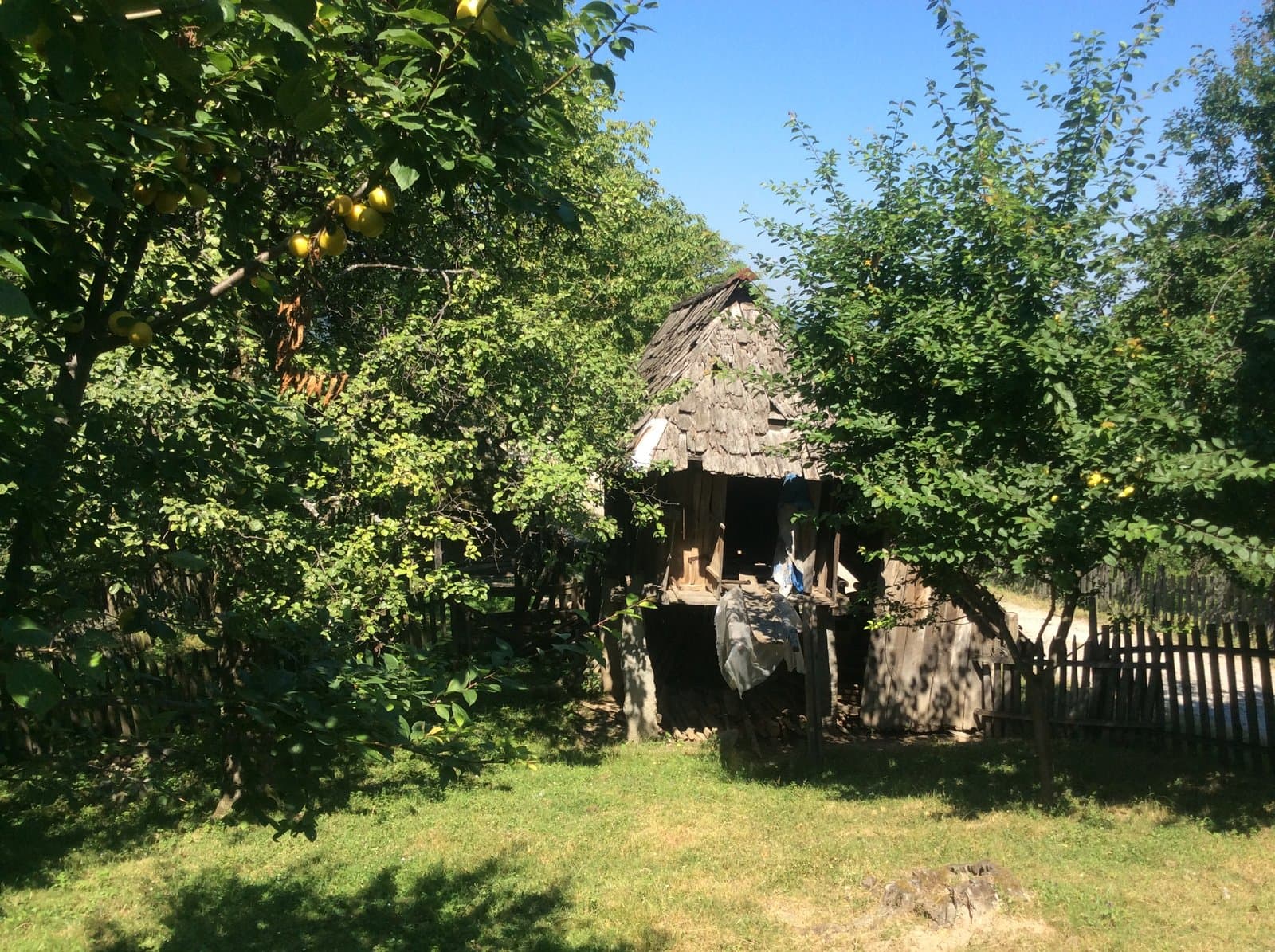
Mixed plum, apple, and pear — the heart of the farm. Plums (šljiva) have been grown in this part of Serbia for centuries. Our trees are old varieties, slow to grow, rich in flavour. The orchard floor is kept in wildflower cover — clover, vetch, borage — which feeds the bees and builds the soil.
Cut twice in the summer for hay that feeds the farm animals through winter. Between cuts the meadow is full of flowers — field scabious, knapweed, ox-eye daisy, wild orchids in wet corners. One of the most flower-rich habitats remaining in western Serbia.
On the upper slopes, mixed beech and oak give way to hornbeam and hazel on the drier ridges. The forest is managed selectively — we take a small number of trees each year for firewood and building timber, leaving the rest to grow. Deadwood is retained for beetles, woodpeckers, and fungi.
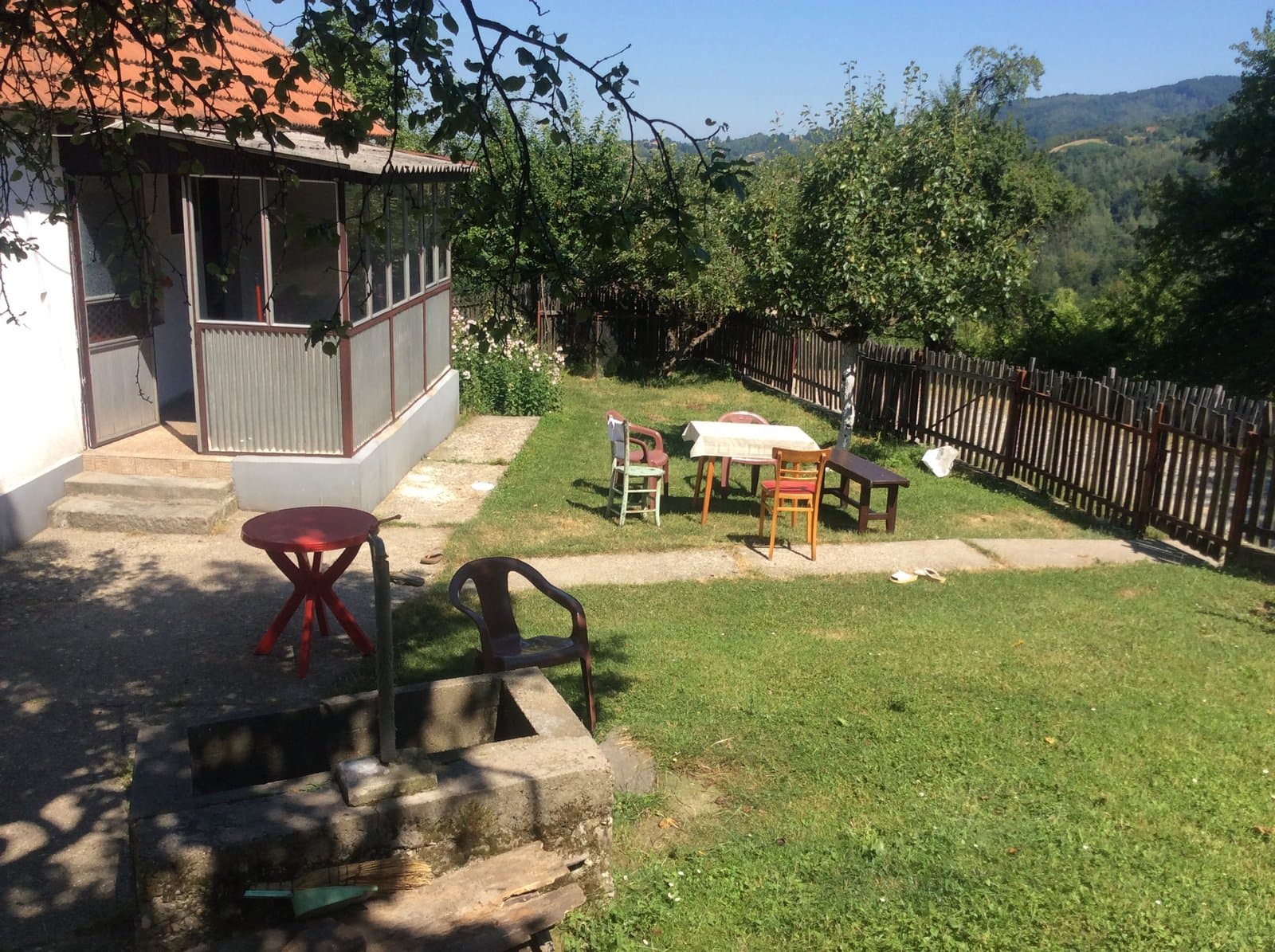
Adjacent to the farmhouse — tomatoes, peppers, potatoes, onions, courgettes. Grown for the household, with surplus given to guests. No synthetic inputs. Compost from kitchen waste and livestock manure.
The farmhouse, barn, and working area. Traditional Serbian construction — whitewashed stone base, wooden upper storey, deep-eaved roof. The barn houses the honey extraction room, tool store, and winter firewood. A working farm smells of it.
How we farm
Regenerative by default.
The term “regenerative agriculture” was not coined when this farm was established. But the principles — minimal soil disturbance, diverse crops, cover on the orchard floor, integration of livestock into the system, no synthetic inputs — have been in practice here for generations simply because they work.
The beehives are not incidental. Thirty colonies working the orchard and meadow maintain the pollination that keeps the fruit trees productive. The wildflower strip along the orchard edge, the hay meadow cut late to allow the flowers to set seed, the dead wood left in the forest for beetles — these are not conservation measures imposed from outside. They are how this farm has always functioned.