This is not a farm that produces one thing at scale. It is a farm that produces many things in modest quantities, each in its season, each connected to the others. The plums feed the still. The orchard feeds the bees. The bees pollinate the orchard. The meadow feeds the hay. The hay feeds the animals. The animals fertilise everything.
What you find here reflects what is in season. In August, plums and honey. In September, mushrooms and wild herbs. In October, rakija and dried fruit. In winter, very little — which is the point.
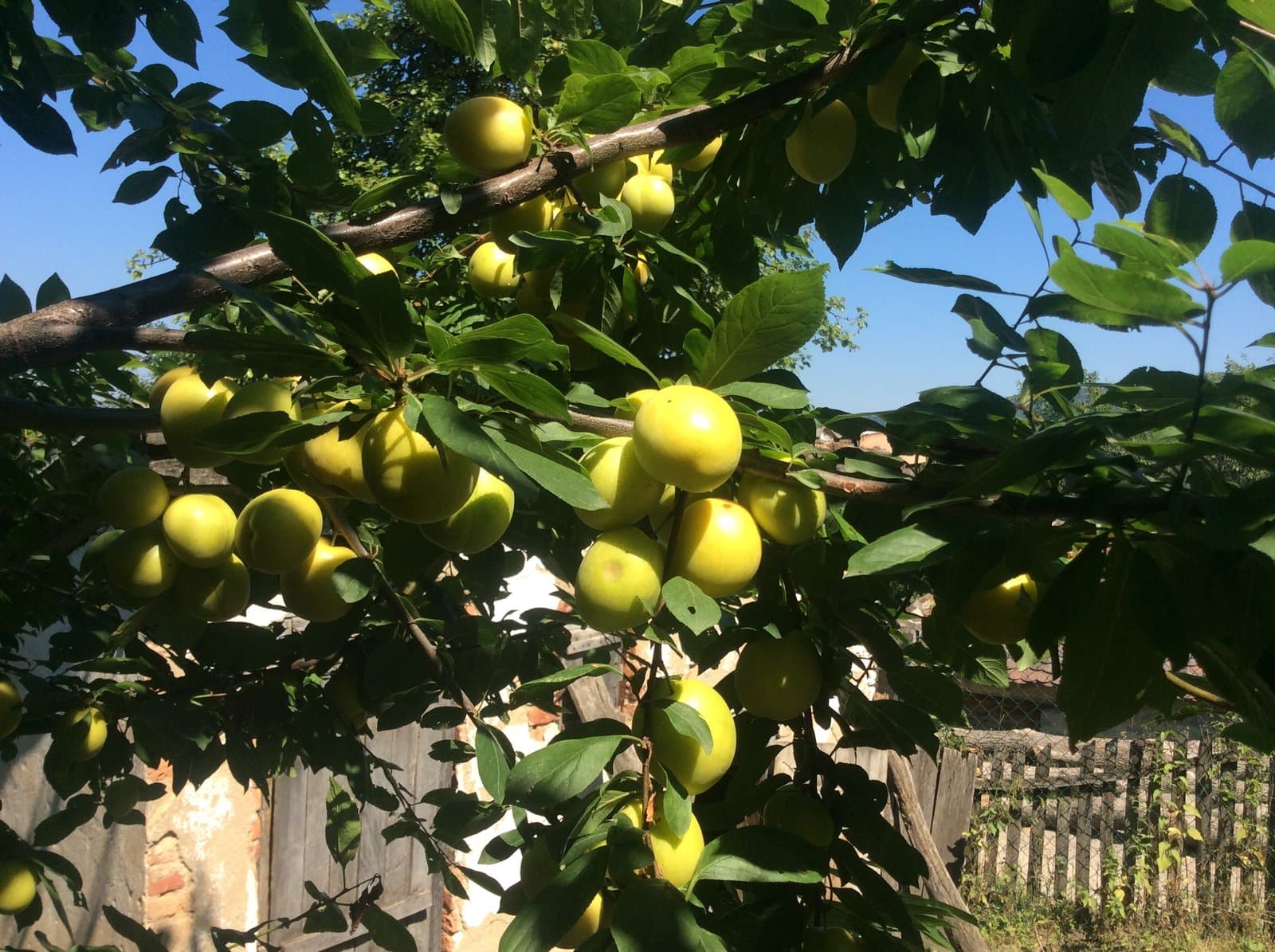
Orchards
Plums. And rakija.
The šljiva — the Serbian plum — is perhaps the most important agricultural plant in western Serbia. We grow several old varieties, some of which have no commercial name, only a local one. The trees are slow, long-lived, and produce fruit that is intensely flavoured compared to commercial varieties.
At harvest (late August to September) the plums are picked by hand, sorted, and dried or sold fresh to local traders. A portion goes to the kazán — the copper still — to become šljivovica, the plum brandy that is as much a part of Serbian culture as bread. We do not make it in large quantities. We make it well.
Between the orchard rows we keep a permanent wildflower cover of clover, phacelia, vetch, and yarrow. This is the bees' primary summer forage. It also builds organic matter in the soil and suppresses weeds without cultivation.
- Fresh plums (August–September)
- Dried plums (year-round)
- Plum jam
- Šljivovica (limited, available to guests)
Beekeeping
Thirty hives. Mountain honey.
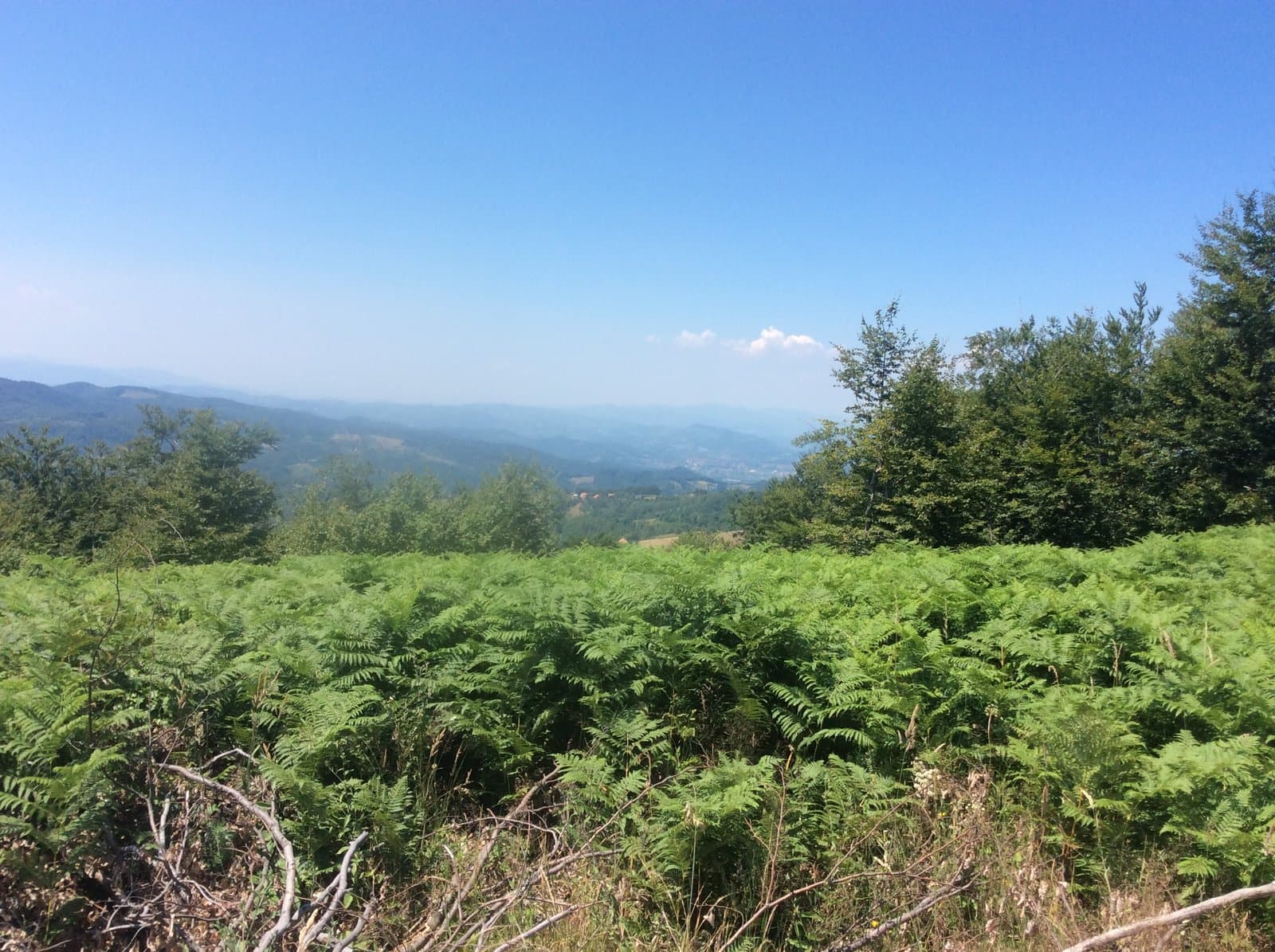
Our beekeeper has kept hives for as long as he can remember. The current stock — thirty colonies — are positioned at the orchard edge, facing south-east to catch the morning sun. They forage across the whole farm: the orchard cover, the hay meadow wildflowers, the forest-edge lime trees, the meadow herbs on the ridge above.
The honey is extracted once in mid-summer, once in autumn. It is raw and unfiltered — cloudy, strongly flavoured, and nothing like supermarket honey. The summer extraction is lighter and floral; the autumn extraction is darker, with resin and forest notes from the honeydew that comes in August.
Beeswax from the annual capping is rendered and sold or made into candles. Propolis is collected and tincured for local use.
- Raw mountain honey (summer and autumn harvest)
- Honeycomb (limited)
- Beeswax candles
- Propolis tincture
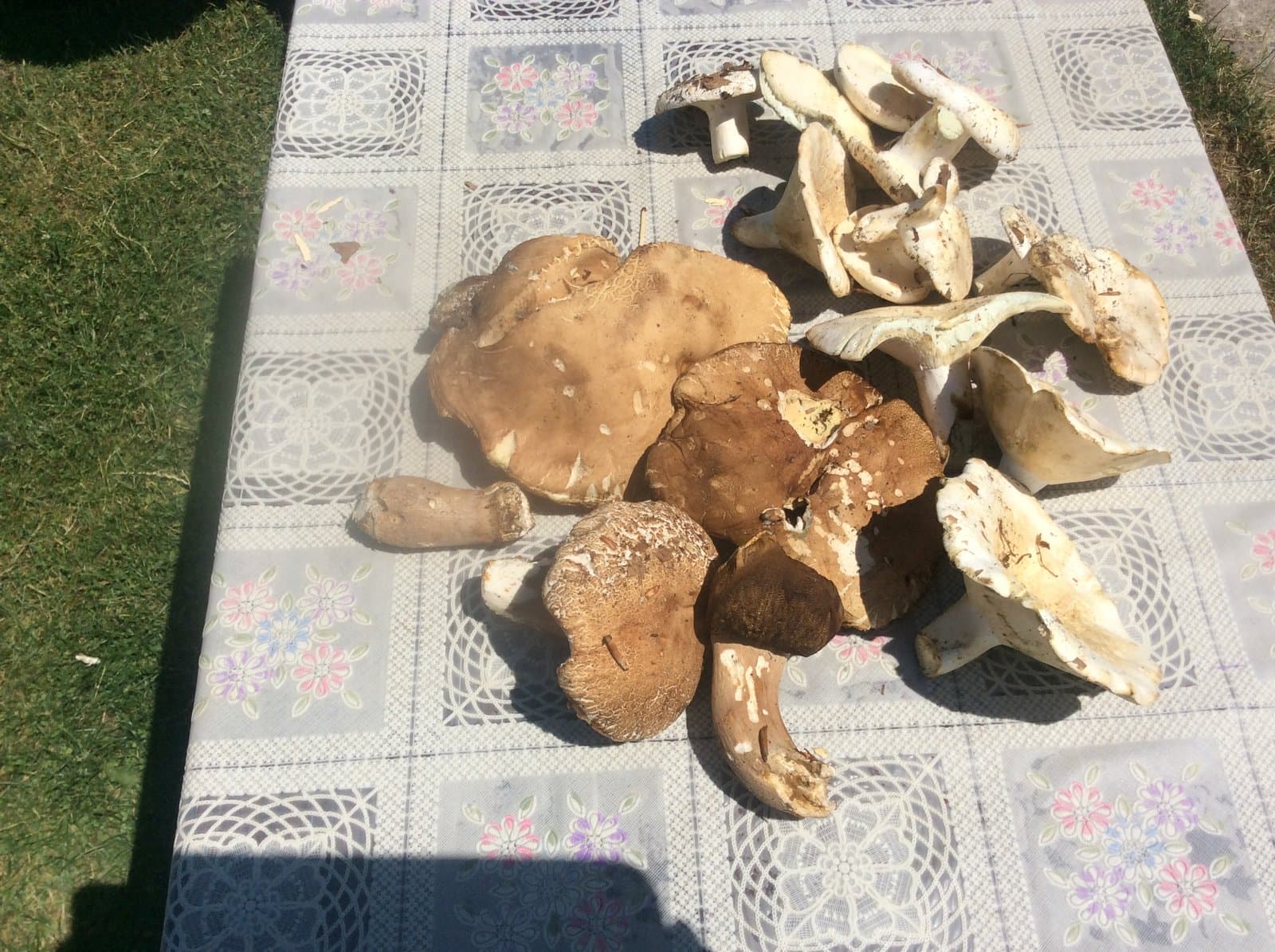
Wild harvest
From the forest floor.
The beech-oak forest above the farm produces reliably from August through October. Porcini (vrganj) appear first, in late July if the summer rains have been good. Chanterelle (lisičarka), parasol mushroom, and in some years the cep follow through September.
We do not cultivate mushrooms commercially. We harvest what the forest gives, which is different each year. Guests who want to forage are welcome to join the morning walk.
The forest also provides: wild garlic (medvjeđi luk) in early spring, elderflower in May, rosehip in autumn, and various medicinal herbs — yarrow, lemon balm, St John's Wort — from the meadow edges throughout the season.
- Wild mushrooms (seasonal, available to guests)
- Wild garlic (spring)
- Elderflower syrup
- Dried herbs
“What's on the table depends on what's in the field.”
Guests are welcome to join the morning farm rounds, help with harvest if they wish, and purchase farm produce directly from us during their stay.